Monthly Archives: February 2015

#crowdsourcing: help me re-name a game!

A 1684 depiction of Vitruvius (right) presenting De Architectura to Augustus

“Behold, I found Rome of clay, and leave her to you of marble.” – Augustus’ last words to the people of Rome.

I’m looking for a new name for my game Roma (formerly Rhome). Roma is a fine name, but it has been used recently for a couple of other games and I don’t want to conflict with them.

Roma is set in Ancient Rome, during the reign of Augustus. Players take turns placing tiles on the board, competing to build the most glorious buildings and leave a lasting legacy.

Augustus has been used very recently for a game, but I think City of Marble would be a fitting name, evocative of the emperor’s famous line.

Architectus Romanus gives you a pretty good idea of what’s going on in the game.

Vitruvius was Augustus’ architect, and his De Architectura is the classical text on Roman architecture.

ROMA_THE_FOUNDATION_in_play.JPG

I’d love to hear your reactions and suggestions. Got a great idea for a name? Let me know! I’m looking for suggestions that are catchy, easy to say and easy to remember. If I use your suggestion, I’ll send you a copy of the game when it’s printed!

edit: Update! See the latest update and a new poll here.

fourth 4P update and final thoughts


Last Friday I drove to Chicago for a play test jam with my old pals Jeph Stahl and Greg Daigle, both sharp, successful, highly-respected designers. We all had new games we were eager to get on the table and dig into. I’d brought along Dungeon of Doom, with the hopes of fitting in a fourth play test session in January, to complete the 4P challenge.

Jeph and Greg are both familiar with an earlier version of this game and were eager to see what I’d cooked up for this new iteration, so I set it up and we got right to work. Jeph quickly zeroed in on a flaw I’d missed in earlier play tests and we worked through several iterations that afternoon, looking for just the right fix.


Throughout that afternoon, there was an issue we kept dancing around. I’d changed the resolution of the original risk-reward mechanism in this new  version of the game and it just didn’t feel right. It had lost the tension that made the original so much fun. We proposed and tested several changes, but at the end it was apparent they were little more than band-aids.

Most of my changes from the earlier game were good, positive gains in the system, but this one was a mistake. I further confirmed this feeling in a play test this Tuesday at my Board Games & Beer game night. It was simply lacking that spark. Fortunately, swapping back to the original risk-reward mechanism (or something closer to it) is an easy fix.

Dungeon of Doom isn’t a finished game, but there is definitely a light at the end of this tunnel. I’ve got a clear goal for my next few play tests, and I think I can wrap this game up over the next couple of months.


I designed a game and play tested it four times in January. I’m very proud of that accomplishment.


4P reactions

I designed a game and play tested it four times in January. I’m very proud of that accomplishment. I’m incredibly happy with the progress I made with the design and I’m excited by the possibilities I see in it. I think people will have a lot of fun with it.

Four play test sessions in, and I’ve had breakthroughs and revelations in each. I have  a solid system to build on and most of the heavy lifting is done. My next step will be to write a rules outline to hang words on. Then; more play testing, more play testing, more play testing.


4P Lessons Learned

Play testing

The first play test of a rough design should be with other designers. You’ll have a lot of rough edges to work around and designers are best equipped to deal with warts on a game. Additionally, play test with players in your target audience early in your game’s development. They’re the people you’re designing for. If you listen carefully, they will help you make the game you want to design into a game they want to play.

Prototyping

Don’t worry about making your prototype pretty, as long as it’s functional and clear. If it needs art, borrow it online from games with similar themes or settings. Don’t reinvent the wheel. You’re going to be making a lot of changes as the game progresses. Don’t make anything you’d feel bad about tearing up and throwing away. Your modus operandi in the early stages is rapid iteration. Get it built and get it on the table. Fail faster!

The Big 4P Takeaway

I had a  lot of fun with the 4P challenge, but my biggest 4P takeaway? I had four play test sessions in January! That’s one play test session each week. It felt practically decadent. It was wonderful! I’d love to continue that pace. I’m going to try to make that happen.

Nothing puts a shine on a dull day like email from a publisher:

We have played through this a few times and we are currently taking a closer look at this game.

board games are a universal language

The board game is a sort of universal language, recognizably familiar, bearing implications of play and interaction. Though we don’t always know the rules, we are often able to infer a great deal simply from the board.

This stone game board is nearly 5000 years old. It was found near Arad, Israel, and dates to the Early Bronze Age, 3000–2650 BCE. It was found with no rule book, yet we can still make a pretty good guess as to how it was played.

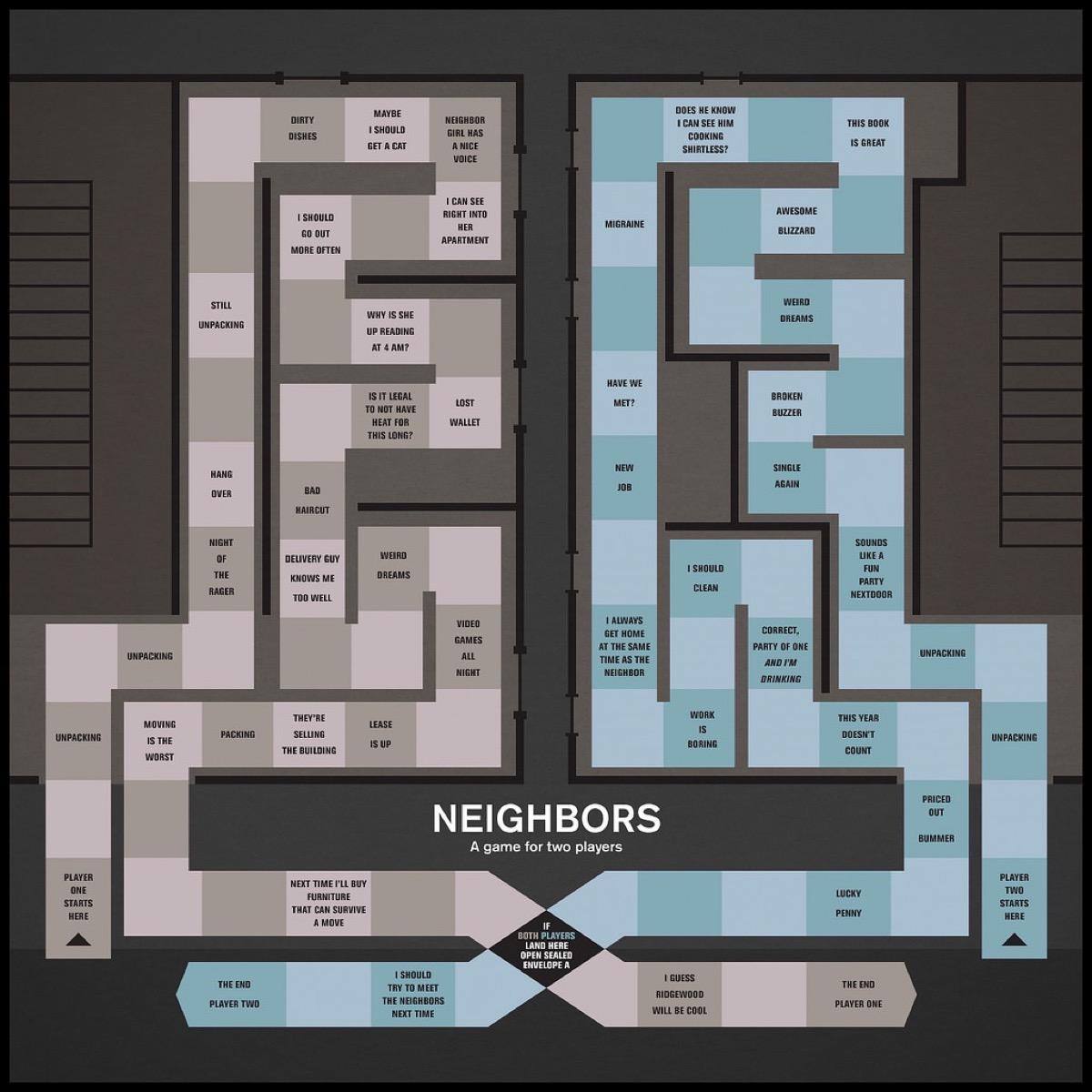
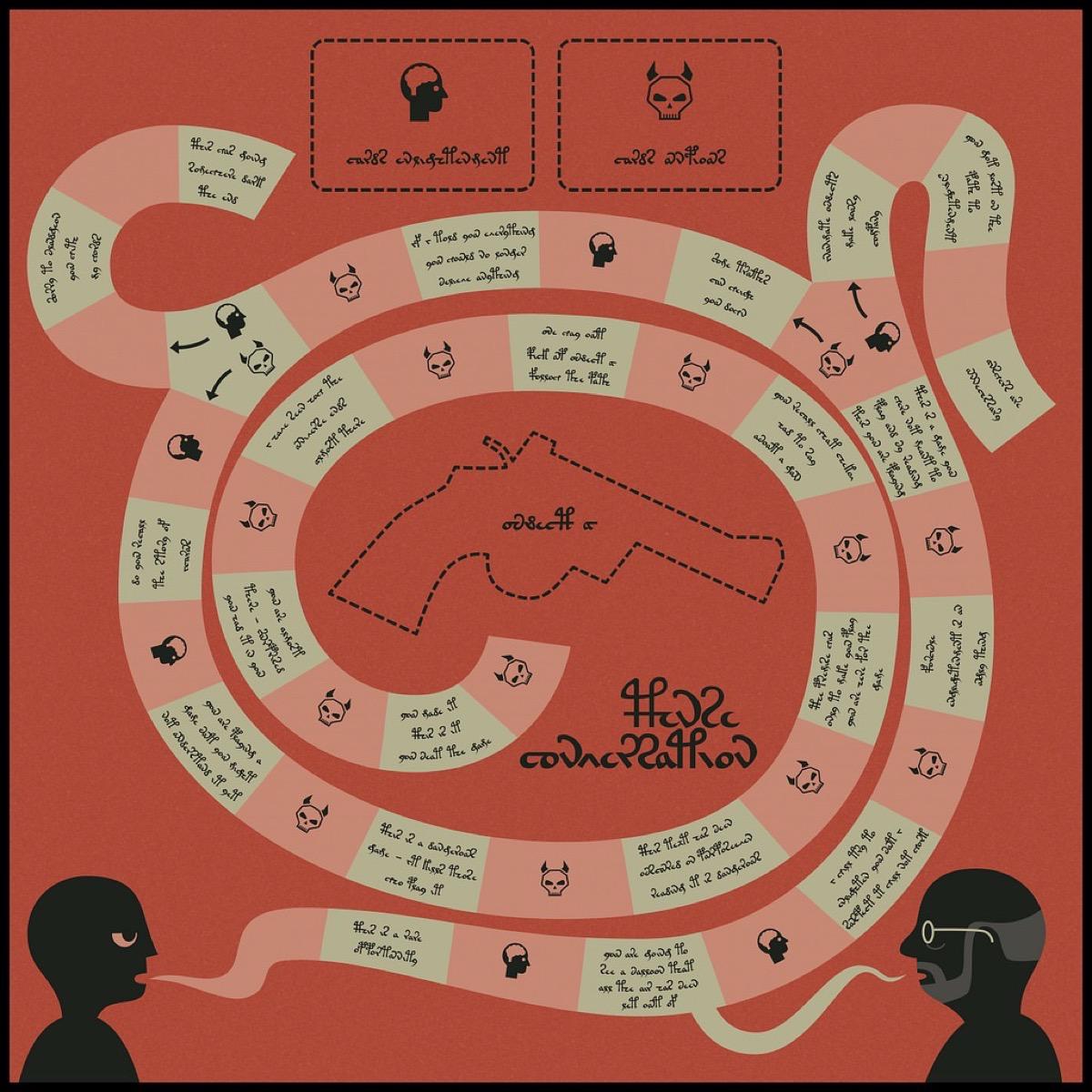
Designer Joe Kowalski plays on this idea with his Impossible Games, featured recently on BoingBoing, crafting a series of boards games that tell stories.

Joe says:

Last month I was asked to participate in an art show. I was told was that I’d be receiving some objects, and I was to craft a response to them using whatever medium I wanted. A week later, I received a package. It contained a cryptic telegram from the 1960s, a disc with an atom icon carved into it, and a metal ruler that measured days rather than distance.

I pondered these objects for a while. Each of them seemed to be designed to be part of a larger story. The disc in particular reminded me of a piece from a board game. And I started thinking of board games, and how the boards themselves are these weird, linear story maps. Presented without the accompanying rules or pieces, the viewer must try to infer what the game wants from those that play it.

Most games have pretty clear goals, pretty simple stories. Not these ones. They’re as much a mystery as the objects that inspired them, but they have their own stories.

Here’s the description I wrote for the gallery:

Impossible Games

Here are four unplayable board games. They are unplayable because aside from being mounted to a wall, they appear to be missing important pieces.

Closer examination reveals unusual, sometimes masochistic instructions.

These games tell stories using the language of board games. Each story is told both by what is present and what is not. Good luck.

What’s in the box?

What stories do you read in these mysterious game boards?