a benefit of playing games in public

Earlier this month, my regular Tuesday night board gaming group, Madison Board Games & Beer, participated in a board game charity event held at Wisconsin Brewing Company. The event was organized by my friend Scott Bogen, a Madison-area gamer and host of The Board Game Show Podcast. This gaming event was a benefit for Verona Area Needs Network’s Move the Food campaign. It was well attended and by all accounts a great success!

The turnout was impressive and the event was a ton of fun. The kind folks at WBC were incredibly patient and accommodating of this larger-than-anticipated event, which was open to the general public. They quite happily set up additional tables for us out in the brewery space when the taproom tables filled up. I’d estimate there were close to 150 people playing games that Tuesday evening.

Games are a great tool for community building and outreach. I plan to look into organizing a similar benefit event for The Goodman Center, an amazing community center and food pantry doing vital work in my own neighborhood. Have you ever organized a charity gaming event for the general public? What challenges did you face?


I’m contemplating a blog post about not making prototypes too pretty, while working on this. I may need help.

Bid Track Board

brutal play testing with Dave Chalker

Dave Chalker is a brutal play tester. He will mercilessly cut the still-beating heart out of your game and feed it to you as, in shock, you weep tears of remorse over months and years of wasted effort. You will question your worth as a designer until you grasp hold of your pain and grow from it. And you will thank him for it.

I did.

Back in June of 2013, at the Roundhouse Retreat, I play tested Roma with Dave and another brilliant minimalist designer and fellow brutal play tester, Kory Heath. I really didn’t know what I was in for at the time, but I’ll be forever grateful for that shock to the system; my abilities as a designer have grown steadily with this game’s progress, and we are both greatly improved.

The details of that cathartic play test and the epiphany that followed are a story for another blog post. For now, listen to Dave and his co-panelist John Stavropoulos at Metatopia 2013, where Dave uses that Roma (called Rhome at the time) play test as an example of his method of brutal play testing.

“Your best friend, your spouse, and your grandma all say they like your game, so it must be ready to be published, right? WRONG. The most refined games come from an extended playtesting process, where your decisions are challenged and every mechanic is put through the burning forge of brutal playtesting. Learn how to examine games of your own design and others for ways to streamline, balance, and otherwise turn into a better game by “killing your darlings” and learning what red flags to watch out for in the playtesting process that could sink you after publication.”

See the post at Genesis of Legend here: Episode 47 – Playtesting Brutally

Or stream it directly here:

 RPG Design PanelCast, Episode 47: Playtesting Brutally

talking Protospiel, Roma and more on Something From Nothing

I had a really great time chatting with my pal Chevee Dodd and newcomer Lanier Wexford on the Something From Nothing live video podcast last night. I joined late, about 23 minutes in, to talk about Protospielrenaming Roma and to just ramble entertainingly.


#crowdsourcing redux: re-naming Roma returns!

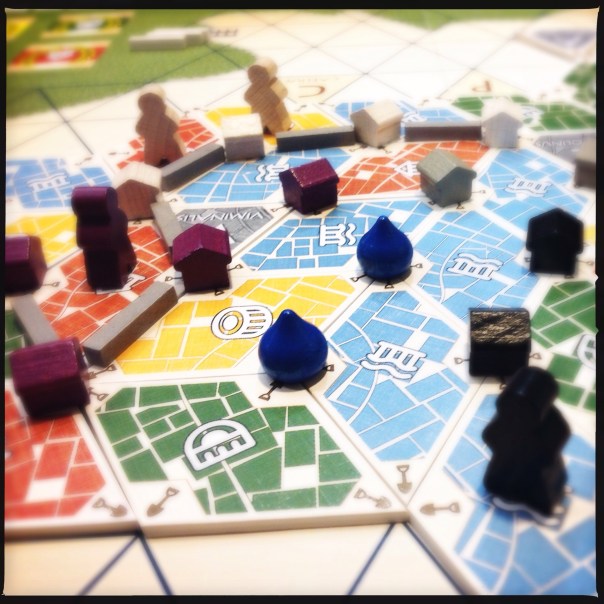
ROMA_THE_FOUNDATION_in_play.JPG

“Behold, I found Rome of clay, and leave her to you of marble.” – Augustus’ last words to the people of Rome.

On Friday, I asked for your help in re-naming my game Roma for publication and you delivered with loads of great feedback and suggestions!

I’ve been working with my publisher to review the responses and winnow the suggestions down to a manageable set. We’re still looking for the perfect name and I think we’ve got some good ones here.

Here’s a summary of the game’s setting and a quick overview:

The reign of Augustus, Founder of the Roman Empire and its first Emperor brought many changes to Rome. With Augustus came an era of relative peace called the Pax Romana, which lasted for more than two centuries. During his more than forty-year reign, Augustus reformed the Roman tax system, developed networks of roads with an official courier system, established a standing army and the Praetorian Guard, created official police and fire-fighting services for Rome and rebuilt much of the great city.

In the game, the players take on the roles of powerful Magistrates, wielding influence and power to direct the reconstruction efforts. The city is rebuilt neighborhood by neighborhood with rhombus-shaped tiles. Great civic buildings are constructed at the intersections of these neighborhood tiles, while aqueducts and fountains deliver water and beautify the city. Players must plan ahead when developing neighborhoods, to ensure their influence is greatest, for their power of influence increases with each civic building completed in their neighborhoods. Players earn points by constructing civic buildings and ensuring access to water and views of fountains. 

I’ve added a new poll with the list of names we like. We’d love to get your input on them. Please take a look and vote on your favorite. Comments are welcome and appreciated!